

Travel brands today are spending more than ever on advertising across Google, Meta and every platform where attention can be bought. And yet, a large chunk of these campaigns fail to convert the way marketers expect.
This article looks at why most travel ads underperform despite high budgets, what’s fundamentally broken in the way travel is being marketed today and how niche platforms like Solis Nature are approaching it differently by focusing less on selling and more on discovery, intent and experience.
Because the problem isn’t visibility anymore. It’s relevance.
The Reality: More Spending, Less Impact
Let’s start with what the numbers say.
- Travel ad spending is projected to reach $8.77 billion by 2025
- Yet, the average conversion rate across industries sits around just ~2.9%
- Even in paid travel campaigns, conversion rates typically range between 2.8%–6.9%
That gap tells you something important:
👉 Attention is easy to buy. Conversion is not.
Why Most Travel Ads Fail
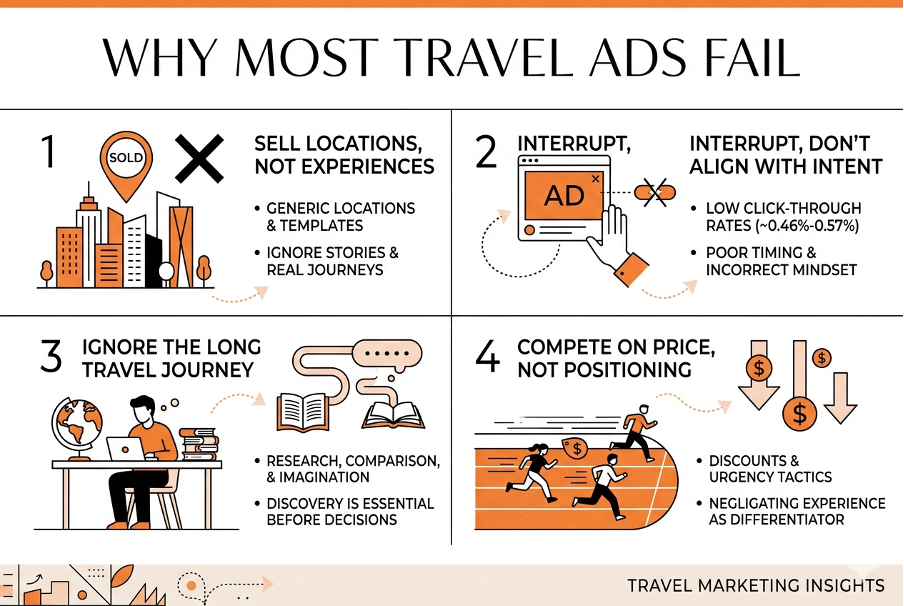
1. They Sell Destinations, Not Experiences
Most travel ads still follow the same template:
- Beautiful location
- Discount offer
- Call to action
But today’s travelers, especially Gen Z and millennials, don’t respond to that.
More than 50% of younger travelers use social platforms for planning trips, which means they’re influenced by:
- stories
- experiences
- real journeys
Not static ads.
2. They Interrupt, Not Align With Intent
Display ads in travel average a CTR of just ~0.46%–0.57%
That’s not because the creatives are bad.
It’s because the timing is wrong.
Travel decisions are:
- high intent
- high involvement
- emotionally driven
Interruptive ads don’t match that mindset.
3. They Ignore the Length of the Travel Decision Journey
Travel isn’t an impulse purchase.
It’s:
- researched
- compared
- imagined
That’s why conversion rates stay low as users don’t convert on the first click. They explore.
Platforms that fail to support this discovery phase lose the user before the decision is made.
4. They Compete on Price, Not Positioning
Most OTAs and travel brands end up in a race to the bottom:
- discounts
- deals
- urgency tactics
But today’s traveler is shifting.
- 42% of Gen Z travelers consider sustainability while planning trips
- Experience, not price, is becoming the differentiator
What Niche Platforms Are Doing Differently
This is where things get interesting.
Instead of trying to win attention, niche platforms are winning trust and intent.
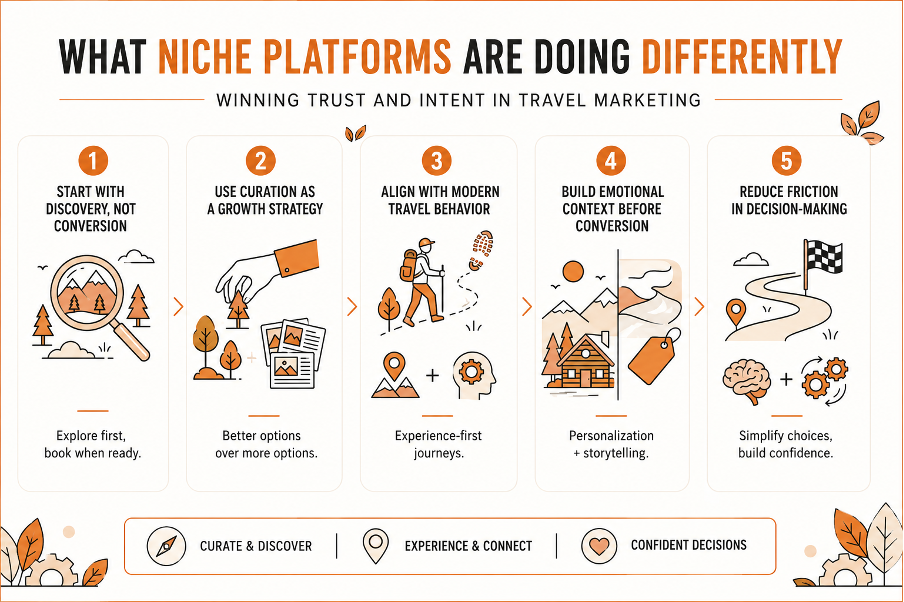
1. They Start With Discovery, Not Conversion
Traditional ads push:
👉 “Book now”
Niche platforms focus on:
👉 “Explore first”
Platforms like Solis Nature are built around this idea. Instead of overwhelming users with thousands of listings, they curate nature-focused stays and experiences, helping users discover options that align with what they actually want.
This reduces decision fatigue and increases intent.
2. They Use Curation as a Growth Strategy
The problem with large OTAs is scale.
As of 2025, OTAs generate $408 billion in global bookings
But scale comes at a cost:
- too many options
- low differentiation
- decision overload
Niche platforms flip this.
Instead of:
👉 more options
They focus on:
👉 better options
Solis Nature, for example, positions itself around handpicked nature stays, which immediately filters the audience to high-intent users.
3. They Align With Modern Travel Behavior
Travel behavior is shifting toward:
- slow travel
- offbeat destinations
- experience-first journeys
And content consumption for travel has increased significantly (over 60% growth in travel content engagement)
Niche platforms don’t just advertise, they educate and inspire.
That’s a fundamental difference.
4. They Build Emotional Context Before Conversion
Instead of showing:
- “₹4999 per night”
They show:
- what the stay feels like
- what the experience offers
- why it matters
This aligns with what modern travel marketing is moving toward:
👉 personalization + experience-driven storytelling
5. They Reduce Friction in Decision-Making
One of the biggest hidden problems in travel marketing is decision fatigue.
Too many options = no decision.
By curating stays and simplifying choices, platforms like Solis Nature:
- reduce cognitive load
- shorten decision time
- increase booking confidence
The Shift Marketers Need to Understand
Travel marketing is no longer about:
- reach
- impressions
- clicks
It’s about:
- intent
- trust
- alignment
The brands that will win are not the ones with the biggest budgets.
They’re the ones that understand how people actually plan travel today.
Final Thought
Most travel ads fail because they try to force a decision too early. But travel isn’t transactional, it’s emotional, layered and deeply personal.
Niche platforms like Solis Nature succeed because they don’t try to “sell travel.” They help people discover it first. And in today’s landscape, that’s what converts.